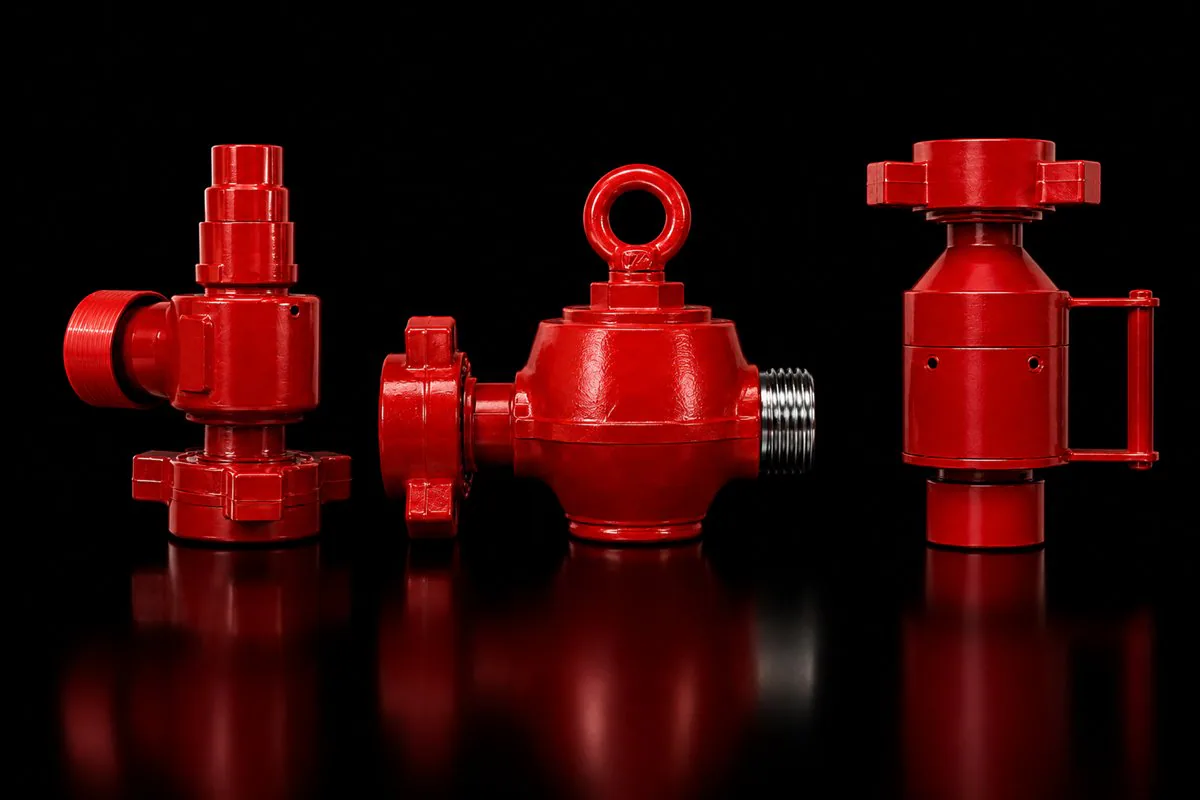
Crossovers vs. Swages vs. Flange Adapters
Use a crossover to change the end arrangement, a swage to change nominal flowline size, and a flange adapter to connect flanged equipment to a hammer-union flowline.
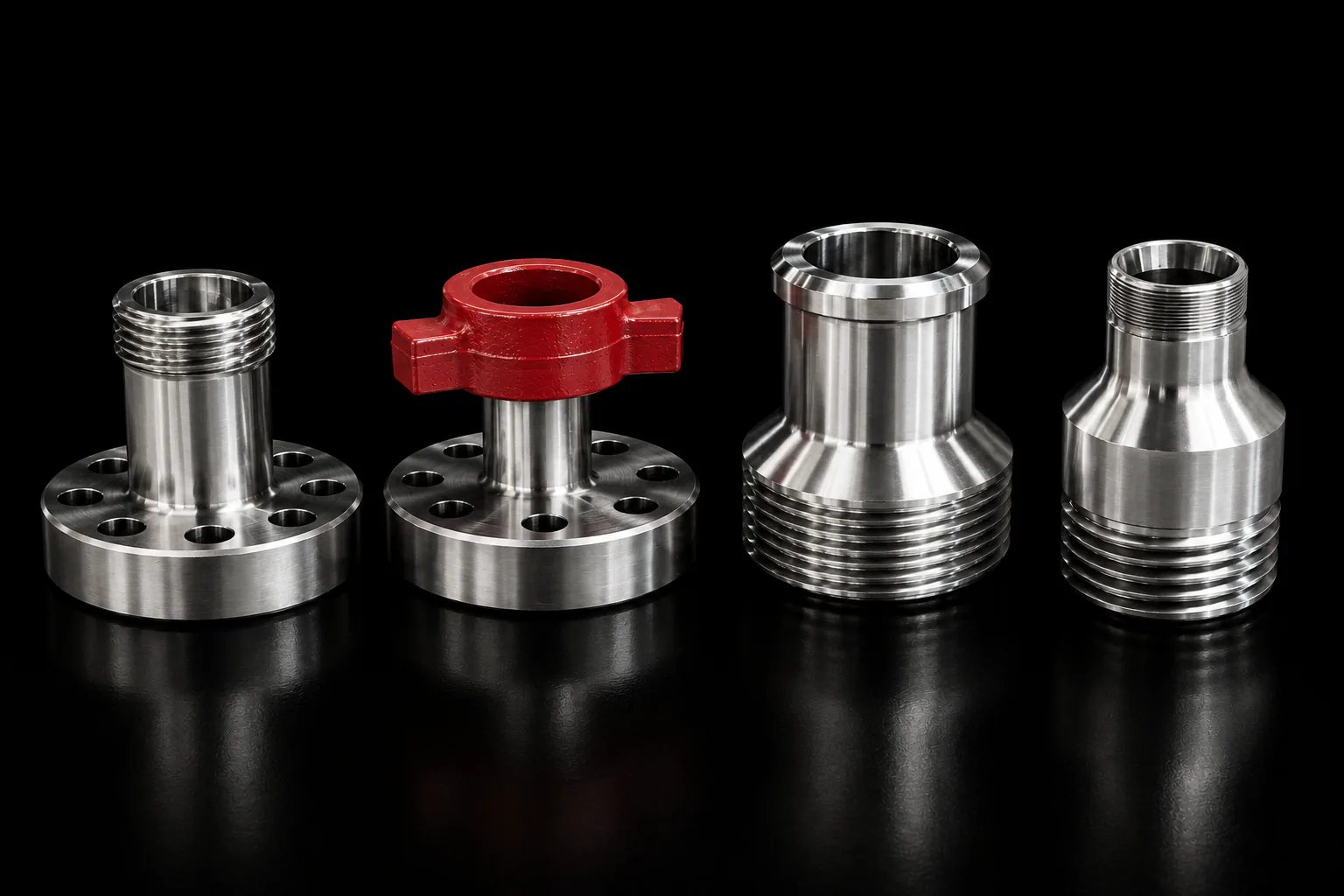
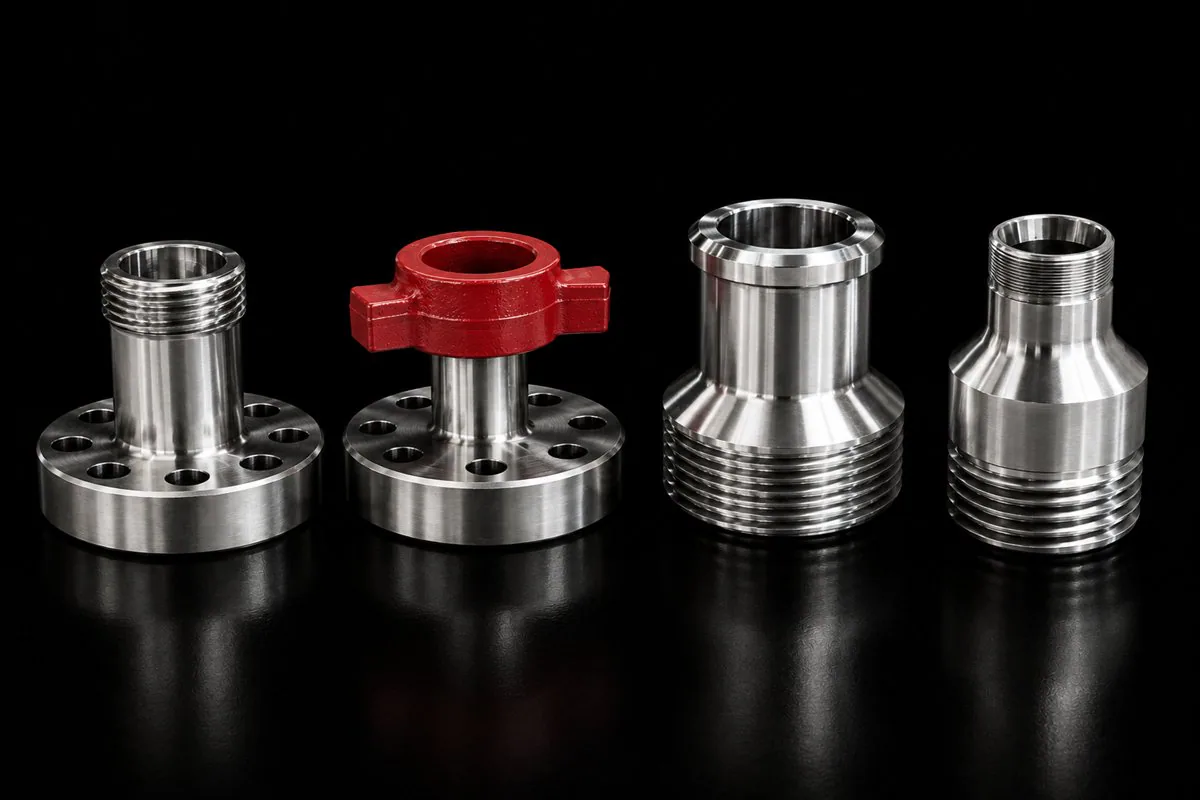
What Is the Difference Between Crossovers, Swages, and Flange Adapters?
Crossovers, swages, and flange adapters can look like variations of the same basic part. In practice, each one solves a different connection problem.
A crossover changes the connection arrangement between compatible flowline components. A swage changes nominal flowline size. A flange adapter joins flanged equipment to a hammer-union flowline. If you can identify which of those three things is changing, you are usually in the right product family.
A complete specification also covers both sides of the connection, along with the pressure class, materials, service requirements, and mating equipment.
Picture the connection from one side to the other and ask what changes: the end arrangement, the nominal size, or the equipment interface.
Which Connection Product Fits Each Type of Change?
Use the chart to match the change in the connection to the part designed to handle it. Then fill in the size and end details for both sides.
| Product | Primary change | Cactus configurations |
|---|---|---|
| Crossover | Connection gender or end arrangement | Figure 1502; one- through five-inch sizes; male-to-male, male-to-female, or female-to-female. |
| Swage | Nominal flowline size | 2 x 1, 3 x 2, 4 x 2, 4 x 3, 5 x 2, 5 x 3, and 5 x 4-inch reducing combinations. |
| Flange adapter | Flanged-equipment to hammer-union interface | ANSI or API flange interface adapted to a male or female hammer-union connection. |
Matching nominal sizes do not make these products interchangeable. A crossover can change connection gender while keeping the same size. A swage changes the nominal size itself. A flange adapter adds a flange interface with its own required details.
When Does a Connection Require a Crossover?
Cactus Flow Control crossovers connect compatible flowline equipment when the required end arrangement changes from one side to the other. Our Figure 1502 crossovers cover one- through five-inch nominal sizes.
Male-to-male, male-to-female, and female-to-female configurations are available, depending on the connections being joined.
How Do Crossover End Arrangements Differ?
A male-to-male crossover has male hammer-union ends on both sides. A female-to-female crossover has female ends on both sides. A male-to-female crossover changes connection gender across the component. The right arrangement is the one that creates a compatible interface with the equipment already on each side.
Standard-service and NACE material configurations are available where sour-service requirements apply. Include the service and material requirements with the connection details so the crossover can be matched to the application.
When Does a Flowline Require a Swage?
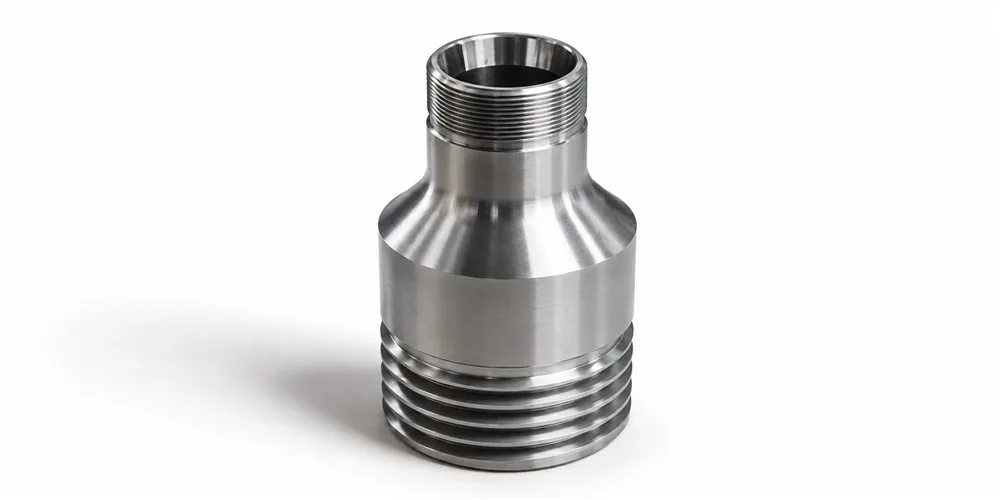
A swage creates a compact transition between different nominal flowline sizes. If size reduction is the main change in the connection, a swage is the part to use.
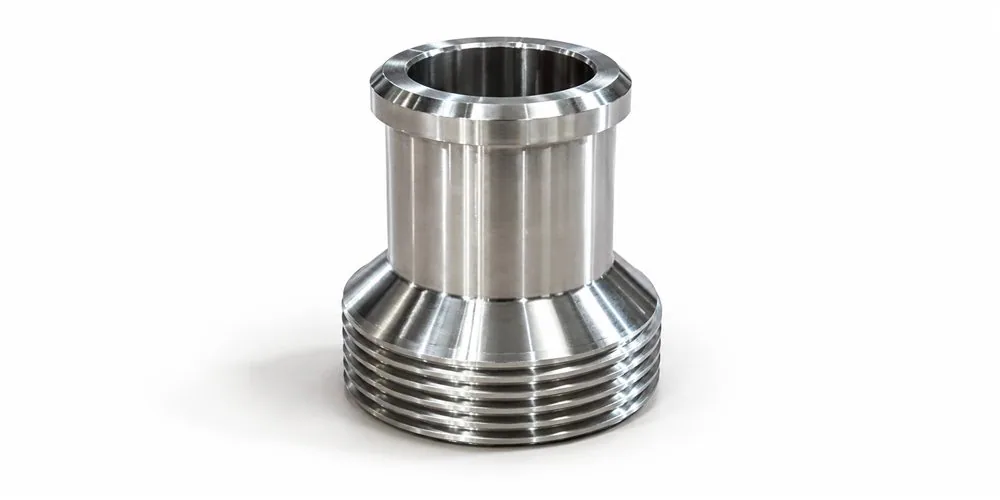
Our reducing combinations include 2 x 1, 3 x 2, 4 x 2, 4 x 3, 5 x 2, 5 x 3, and 5 x 4 inches. When requesting a quote, tell us which size belongs on each side of the installed assembly. Two numbers by themselves do not explain the orientation or the surrounding equipment.
Why Does Swage Orientation Matter?
“4 x 2” tells us the nominal-size combination, but it does not describe the whole interface. We still need the mating end arrangement, pressure class, service requirements, and the location of each size within the assembly.
Cactus swages are available in standard-service and NACE material configurations for applicable sour-service requirements. The correct material configuration depends on the service requirement you provide.
If nominal size changes, start with a swage. If the nominal size stays the same but connection gender changes, start with a crossover.
When Is a Flange Adapter Required?
A flange adapter connects flanged equipment to a hammer-union flowline. The key issue here is not simply gender or nominal size. It is that the two sides use different connection systems.
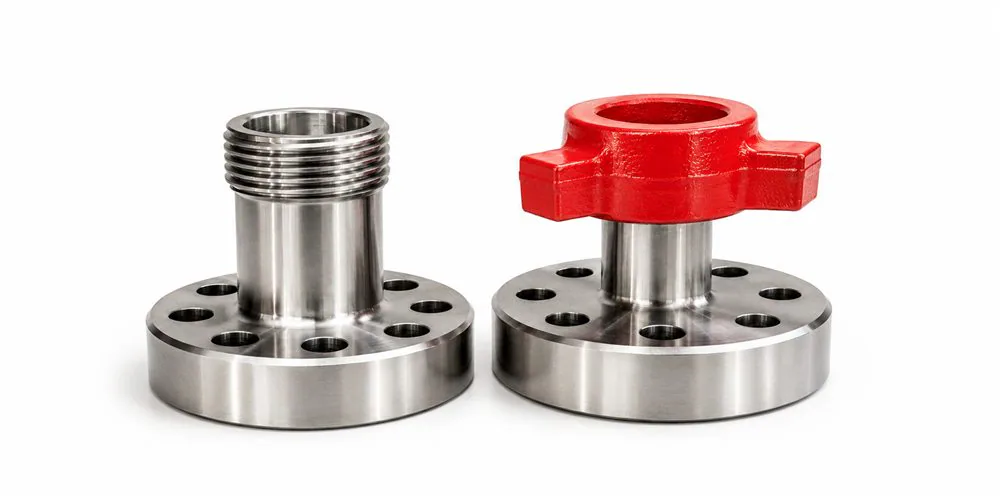
Cactus can configure ANSI or API flange interfaces with male or female hammer-union connections. The flange standard, class, facing, bore, and hammer-union end complete the specification.
What Defines the Flange Side of an Adapter?
The flange side requires the exact standard, class, facing, and bore. These details ensure it mates correctly with the connected equipment. Outside diameter or appearance alone cannot define the interface.
What Defines the Hammer-Union Side?
On the hammer-union side, specify the union figure and whether the connection needs to be male or female. Pressure class and service requirements apply to the entire adapter, not just one end.
How Do You Choose the Right Connection Product?
The component usually becomes clear once both sides of the connection are defined. A change in end arrangement calls for a crossover, a change in nominal size calls for a swage, and a flange-to-hammer-union connection calls for a flange adapter.
- Document side A. Record the nominal size, connection system, union figure where it applies, and whether the end is male or female.
- Document side B. Record the same information for the mating equipment. For a flange, include the standard, class, facing, and bore.
- Identify what changes. A change in gender or end arrangement points to a crossover. A change in nominal size points to a swage. A flange-to-hammer-union connection points to a flange adapter.
- Confirm assembly requirements. State the required pressure class, materials, service conditions, and installed orientation.
What If Only the End Arrangement Changes?
If two compatible Figure 1502 components have the same nominal size but their connection genders will not mate directly, start with the appropriate crossover arrangement. Then confirm both ends and the service requirements.
What If the Nominal Size Changes?
If one side is a four-inch flowline interface and the other is two-inch, use a 4 x 2 swage. Then define the end arrangement, pressure class, materials, and service conditions.
What If Flanged Equipment Meets a Hammer Union?
If flanged equipment has to connect to a hammer-union flowline, start with a flange adapter. Provide the complete flange specification and the required hammer-union interface so both sides are clearly defined.
Which Connection Details Are Commonly Missed?
Most selection problems start when only one part of the connection is described. These common shortcuts leave too much open to interpretation.
- Providing only a nominal size. Size alone does not tell us the connection gender, union figure, pressure class, or flange details.
- Using “adapter” as a catch-all term. Crossovers, swages, and flange adapters solve different connection problems.
- Leaving the two ends unoriented. Make it clear which connection belongs on each side of the installed component.
- Calling out only “ANSI” or “API.” Include the required flange class, facing, and bore with the standard.
- Assuming material from the product family. State the service requirement so the appropriate standard-service or NACE material configuration can be selected where available.
What Information Is Needed for a Connection Quote?
A useful quote request describes both sides of the connection clearly enough that no one has to guess. Include the information below, and mark anything that is still unknown.
- Required function: end-arrangement change, nominal-size reduction, or flange-to-hammer-union interface.
- Nominal size at each end: state both sides in their installed orientation.
- Connection arrangement: identify male or female hammer-union ends as required.
- Union figure: specify the compatible figure rather than relying on appearance.
- Flange details: for an adapter, provide the standard, class, facing, and bore.
- Pressure and service requirements: provide the required pressure class, materials, and operating environment.
Photographs and layout references are helpful for understanding the surrounding assembly, but they do not replace the connection and service specifications.
Common Questions About Crossovers, Swages, and Flange Adapters
What is the main difference between a crossover and a swage?
A crossover changes connection gender or end arrangement. A swage changes nominal flowline size. That is the simplest way to separate the two families.
What crossover sizes and end arrangements are available?
Figure 1502 crossovers are available in one- through five-inch sizes with male-to-male, male-to-female, and female-to-female arrangements.
Which swage size combinations are available?
Available combinations include 2 x 1, 3 x 2, 4 x 2, 4 x 3, 5 x 2, 5 x 3, and 5 x 4 inches. The end arrangement and installed orientation still need to match the assembly.
What information is required for a flange adapter?
Provide the flange standard, class, facing, and bore. Also include the hammer-union figure and connection gender, pressure class, materials, and service requirements.
Are sour-service material options available?
Yes. Standard-service and NACE material configurations are available for crossovers and swages where sour-service requirements apply. Include the service requirement so the correct material option can be selected.